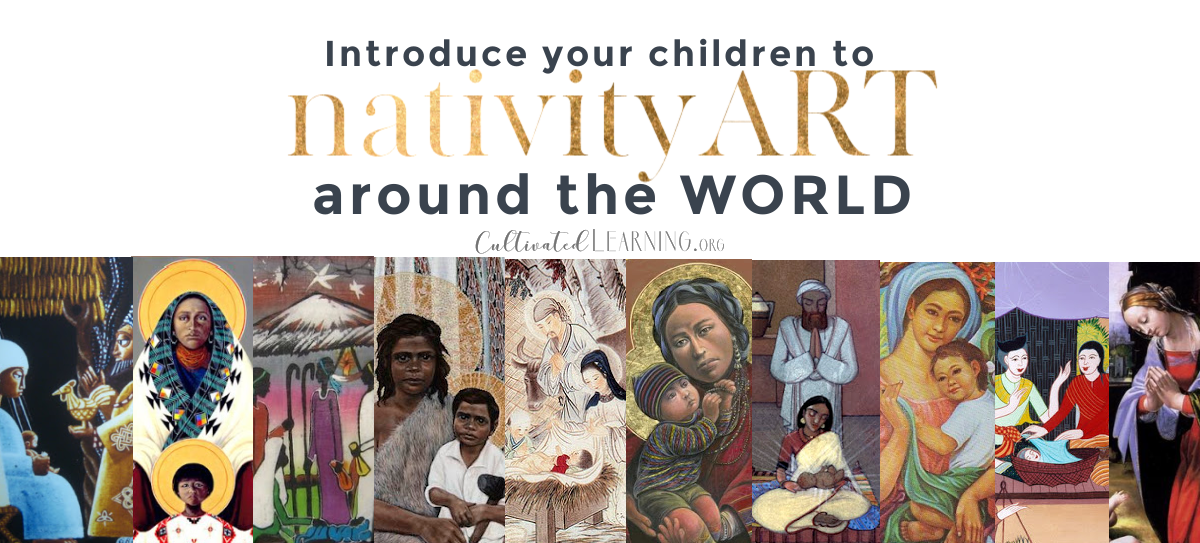
Invite your children into the wonder of the birth of Christ and how his birth is celebrated around the world via art! Here is a beautiful collection of nativity pictures portraying the birth of Christ reflected in cultures all over the world. We give our children a gift when we help them enter into this most pivotal season in human history. And we have an opportunity to remind our children that He truly is the answer to a world that is hurting and dying.
“I will make you a light for the Gentiles, that my salvation may reach to the ends of the earth.” Isaiah 49:6
Jesus came to bring salvation to not only the Jews but the Gentiles too! As word of His salvation spreads across the globe, so do artistic portrayals of biblical accounts set in various cultural contexts. It is a beautiful thing to behold.
While historically, Jesus was 100% Jewish, as the Savior of the World, we see time and again how He is portrayed in various cultural contexts in a way that makes his coming (or any other biblical event) relatable to various peoples. Exploring various cultures (as we do in Go Global) lays down a beautiful foundation of humanity.
It’s important for our children to celebrate not only everything that we have in common as human beings, but also take time to highlight and celebrate our differences too!
What better time than Christmas to highlight, Emmanuel, God With Us!
So take time to explore these beautiful works of art from all over the world that highlight the coming of the Messiah.
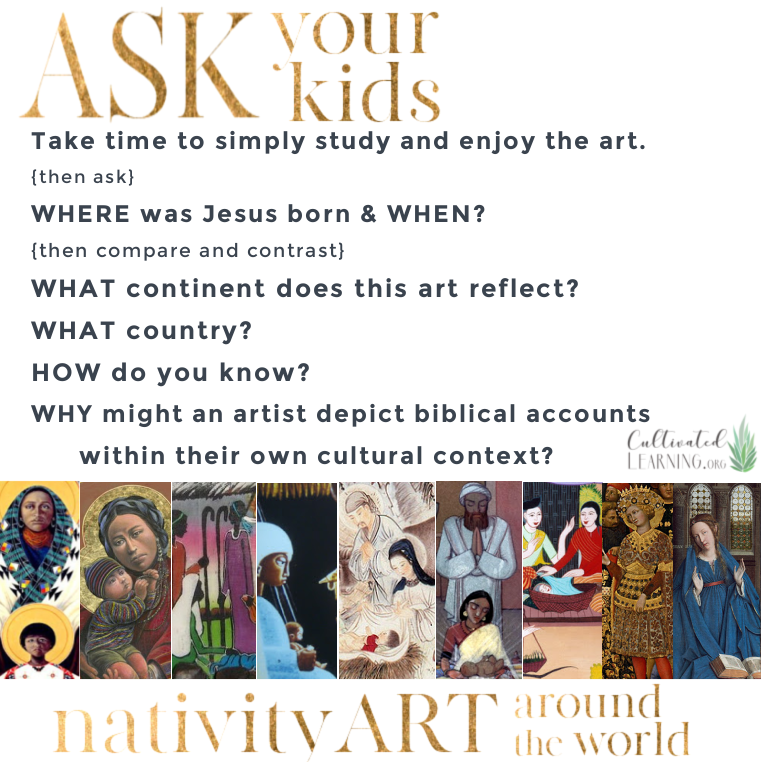
First, study the pictures. Take time to just drink in the images and allow them to speak without any prior direction. It’s always fascinating to see what they pick up on and ask about. Developing an appreciation for art starts with stepping back and quietly observing.
Your child might ask why these pictures are so different and which one is the “real one.” You have an opportunity to talk about artistic license and the impact that art can have on us as people.
Review when and where Jesus was born. We love to pull out our globe and take our children to the timeline and remind them that the birth of Christ marks B.C. (before Christ) and A.D. (Anno Domini – Latin for “In the Year of Our Lord” because we are looking forward to the final triumphant return of Christ.)
Talk about the culture it represents. Ask your child how this picture might help someone understand that Jesus came into the world to save THEM? How does it help someone understand this historical account? Can they guess what country or at least continent it comes from? Can they find it on a map?
North American Nativity Art
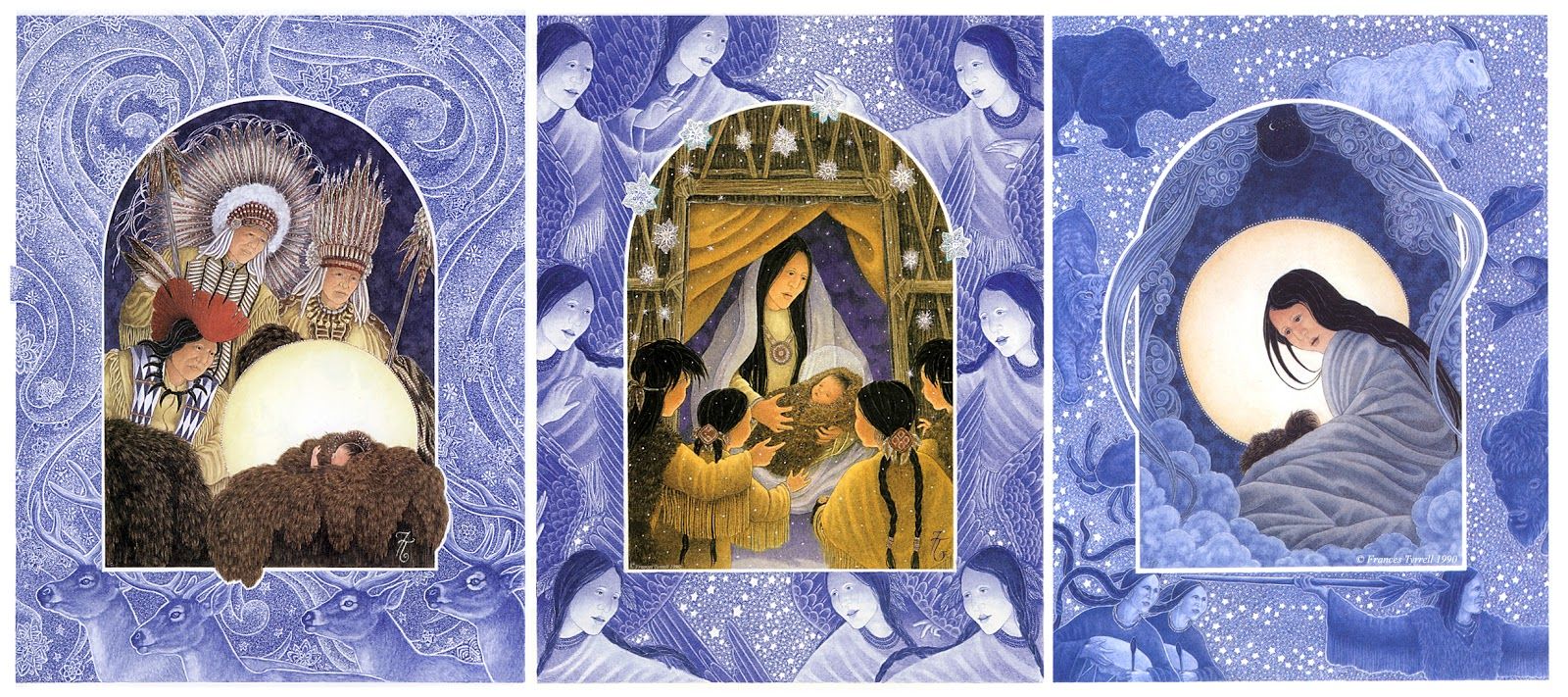
ONTARIO – Illustrations from The Huron Carol by Frances Tyrrell
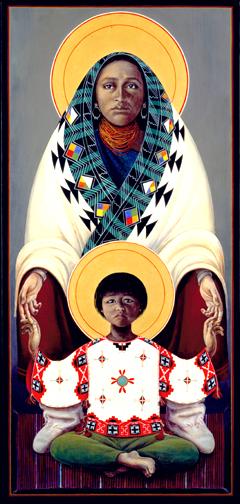
ARIZONA Hopi – Madonna and Child, by Fr. Guiliani. I can’t stop pouring over this man’s artwork.
 MONTANA – Crow Nation – Magi/Chiefs Coming to See the Holy Child, by Fr. Guiliani

GUATEMALA – The Annunciation – by Fr. Guiliani
GUATEMALA – Madonna and Child – by Fr. Guiliani
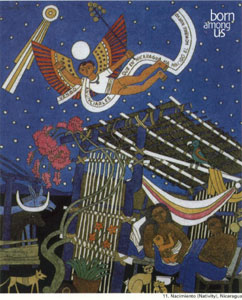
NICARAGUA – Nacimiento, 1983 by Leoncio Saenz The banner reads: “I come to tell them that in Nicaragua the new man has been born.”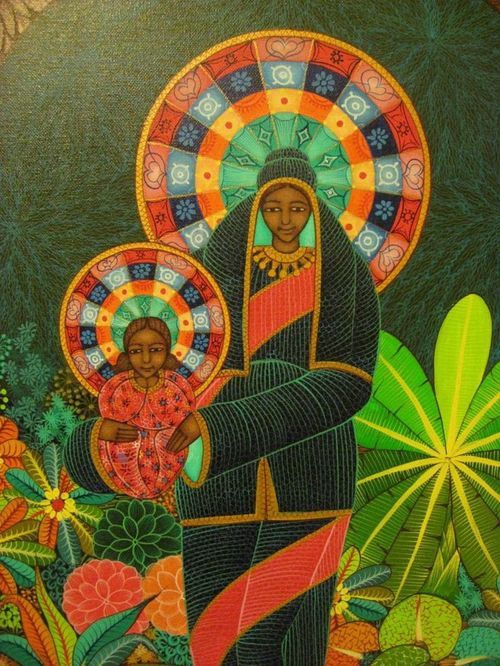
HAITI – Madonna and Child by Ismael Saincilus

USA –José y Maria – A Modern Day Nativity by Everett Patterson
South American Nativity Art
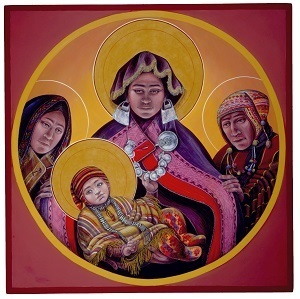
BOLIVIA – Andean Madonna and Child, by Fr. Guiliani 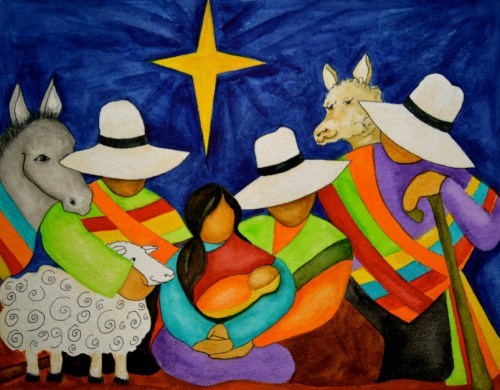
PERU – Peruvian Nacimiento, Marcia Carole
African Nativity Art
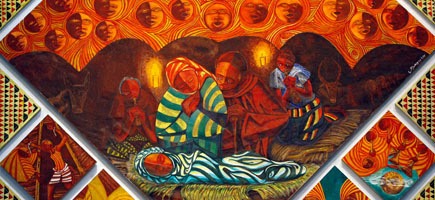
CAMEROON – Nativity, early 1990’s. Fr. Engelbert Mveng. Central scene from a church mural at Holy Angels Church, Aurora, Illinois. 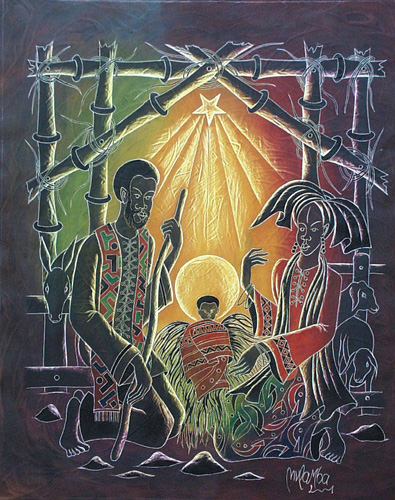 DEMOCRATIC REPUBLIC OF CONGO Nativity. 2001 by Joseph Mulamba-Mandangi, Nativity, 2001.
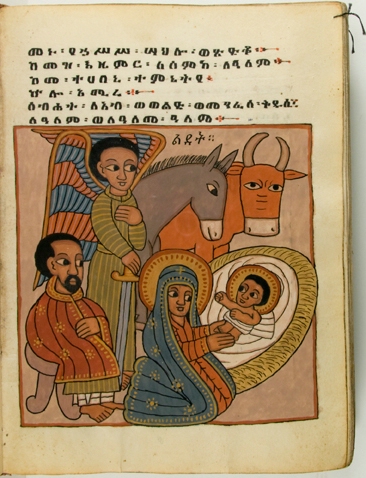
ETHIOPIA – Illumination from an Ethiopic Psalter. Credit: UCLA Library Special Collections Gerald and Barbara Weiner Collection of Ethiopic Manuscripts
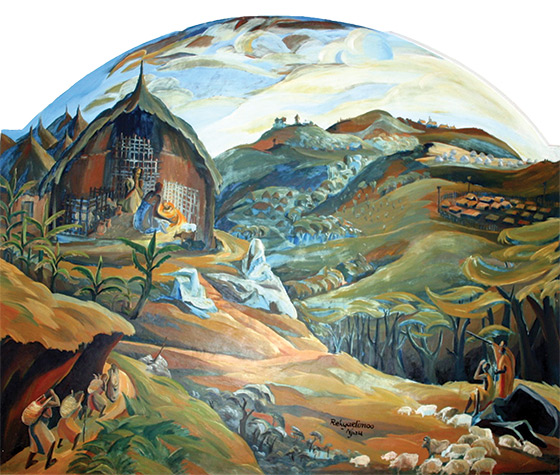
KENYA – The Nativity. 1959 Fresco. Elimo Njau (born Tanzania, active Kenya, 1932-) St. James’ Anglican Cathedral, Kiharu
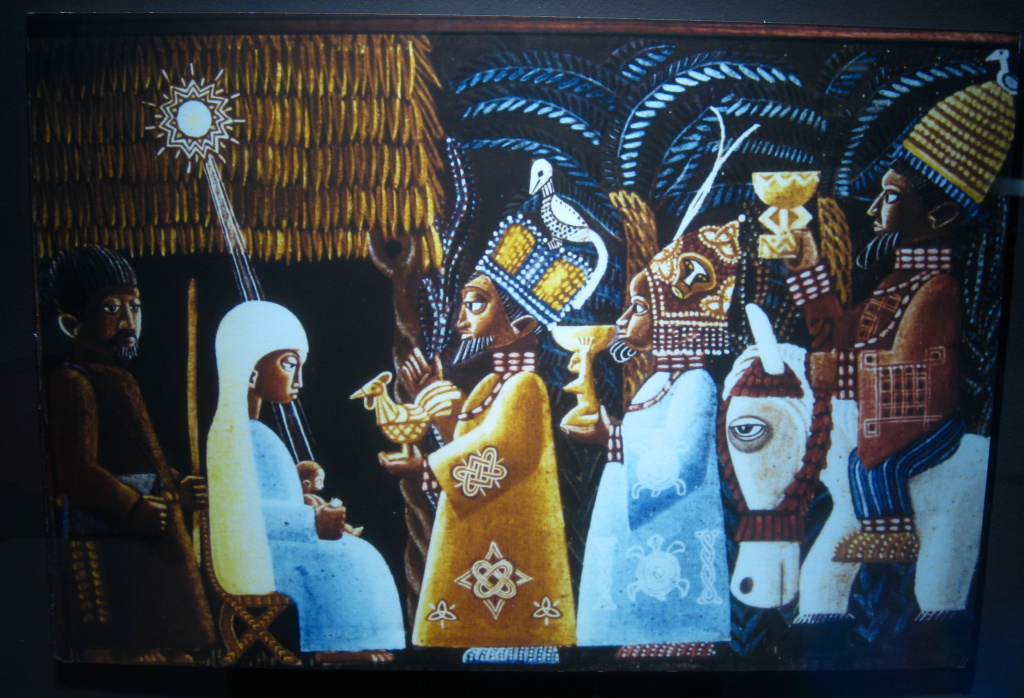
Father Kevin Carroll, Yoruba Nativity, 1948. Oil on canvas, 24 x 36 in. (Photograph of the original on display at the African Art Museum in Tenafly, New Jersey. Original location unknown.) Between World War 2 and Nigeria’s independence (1960) a project began to create a distinct Yoruba (Nigerian) style of Christian art.
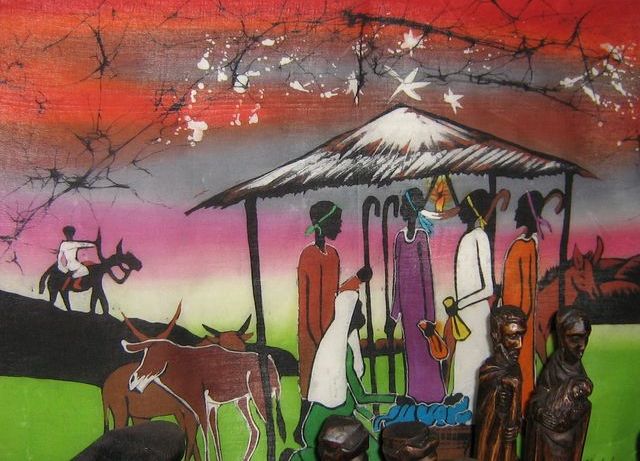
TANZANIA – Nativity batik
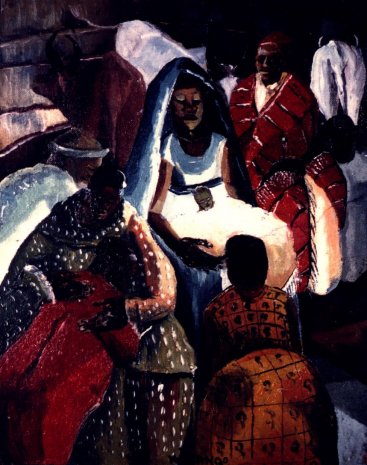
UGANDA – Christ in the Manger. Francis Musango. Oil painting.
Asian Nativity Art
In the 1920’s-40’s a school of fine art was founded in 1925 for the creation and development of distinctive Christian art. They wanted to be sure to not give the impression that Christianity was merely something from the West, but that it was universal in application. Luke Chen, one of the lead painters at the time wrote, “I believe that when I paint the wonders of Christianity according to the ancient rules of Chinese art, the painted object exerts an externally new and unusual effect, so that at the same time I enrich to a marked degree, the old rules of Chinese painting.” We are richer for their contribution to art!
The 5 paintings below were painted shortly before the Communist takeover of China. Lu Hongnian switched to purely secular painting after this time. You can view more here at the Ricci Institute. One of them is even available for purchase in prints.
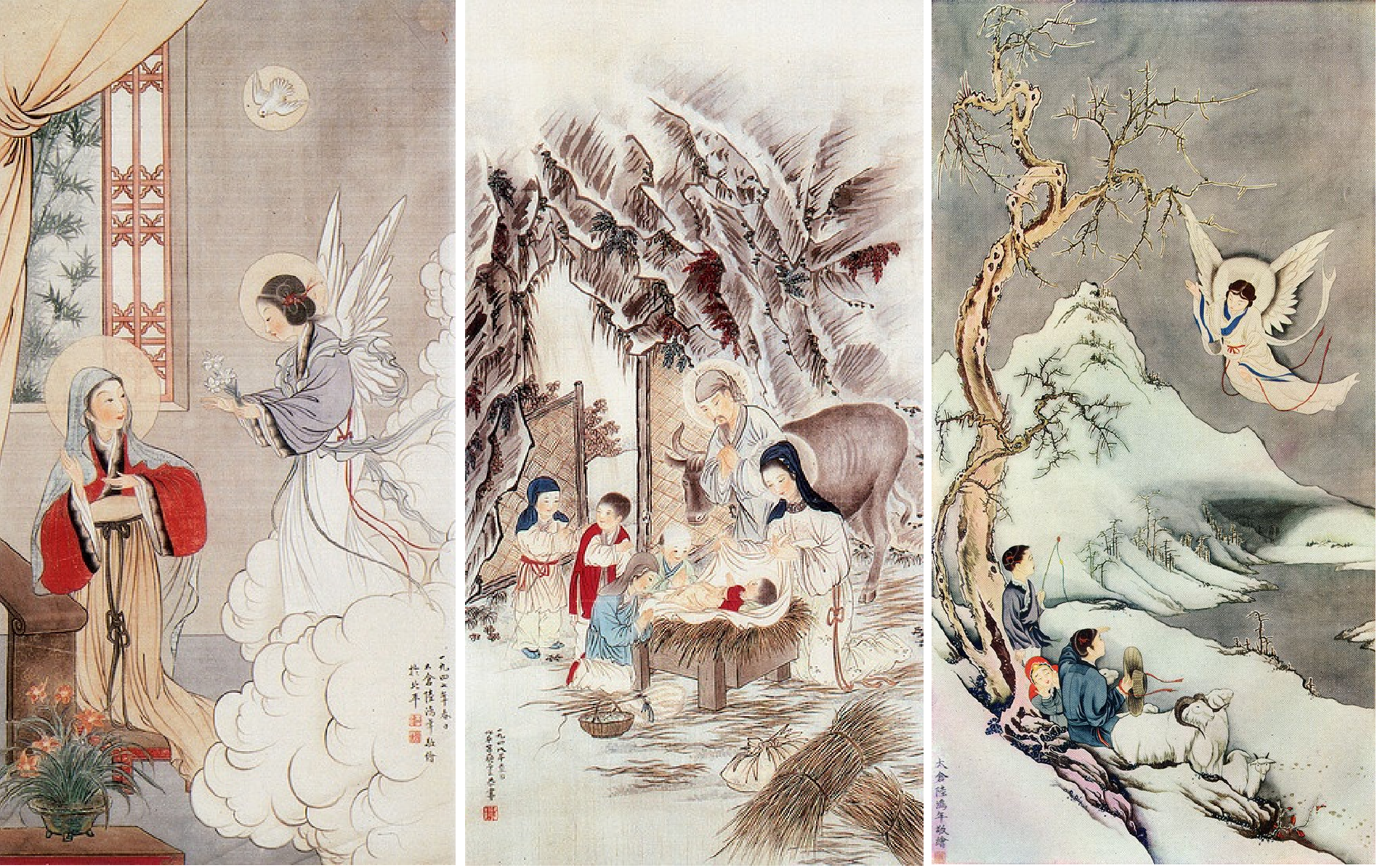
CHINA – Annunciation of Mary. 1948. by John Lu Hung Nien (Lu Hongnian) Chinese watercolor on silk.
CHINA – The Nativity. 1948. by 呂奭雲 (Lü Shiyun, John Lü Shih-yun)
CHINA – The Angels Appearing to the Shepherds
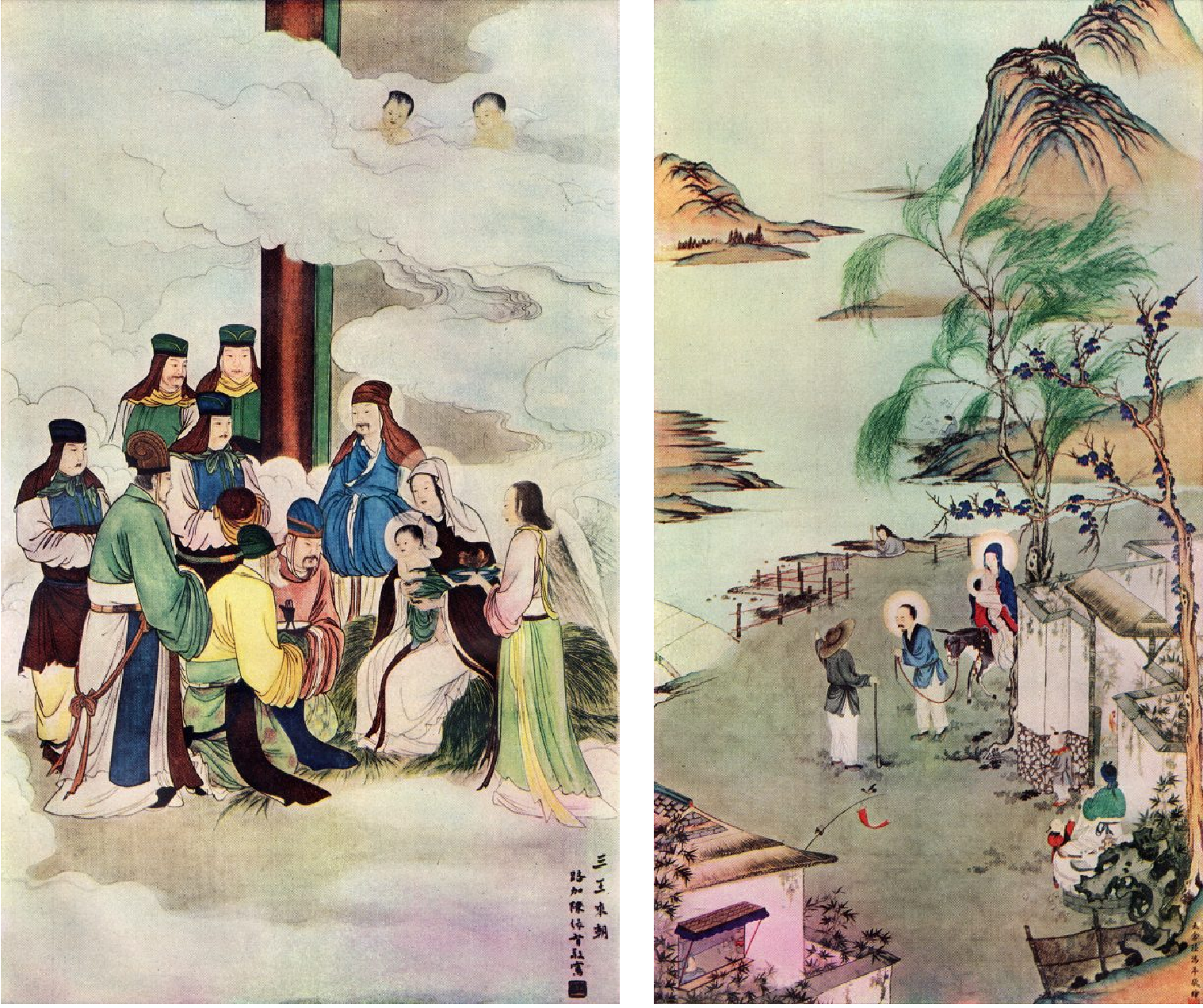
CHINA – Coming of the Magi
CHINA – Fleeing to Egypt. by John Lu Hung Nien (Lu Hongnian)
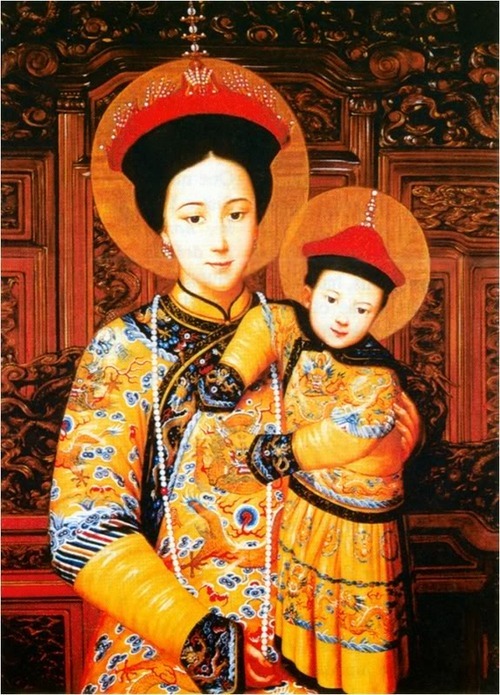
CHINA – Our Lady of Peking, China painted By John Lu Hung Nien (1914)
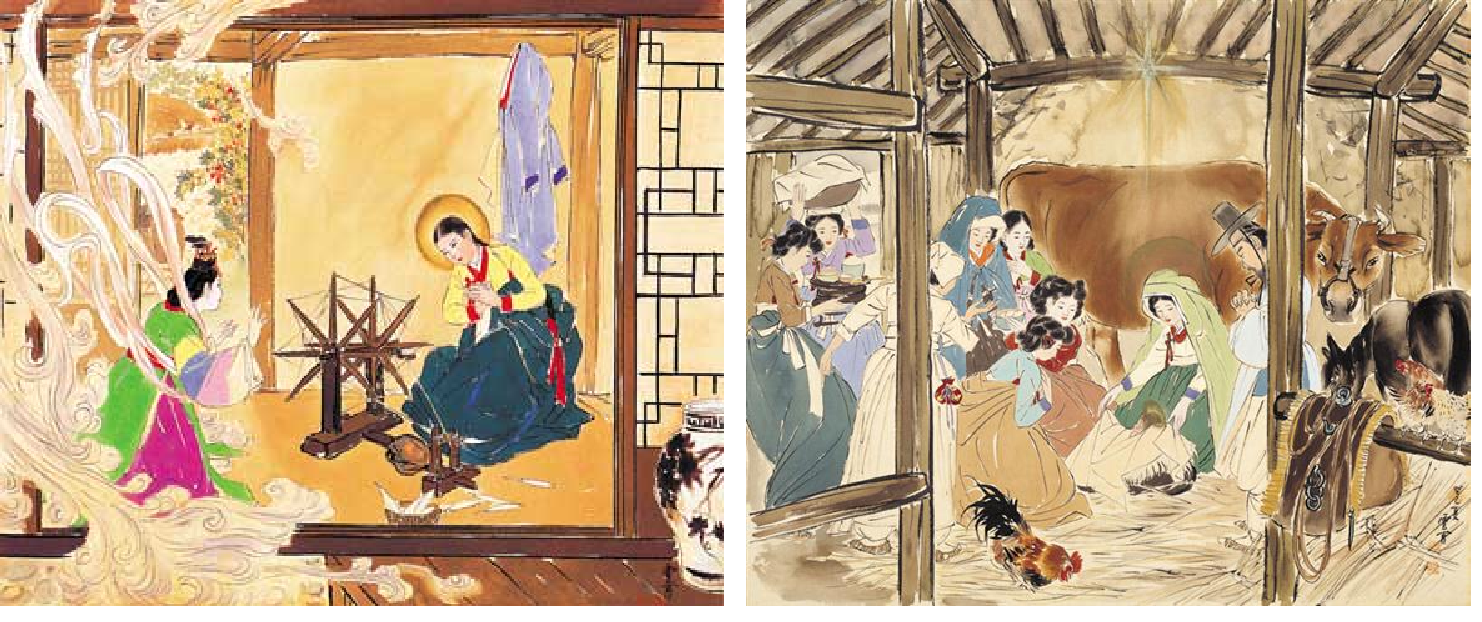
KOREA – The Annunciation by Woonbo Kim Ki-chang 1950’s
KOREA – The Nativity by Woonbo Kim Ki-chang 1950’s
Like European artists, Ki-chang used Korean backdrops to frame his biblical portrayals. The result is beautiful. This artist began painting during the Korean War at a missionary’s suggestion to help communicate truth to his countrymen and as a way to process the pain of war. 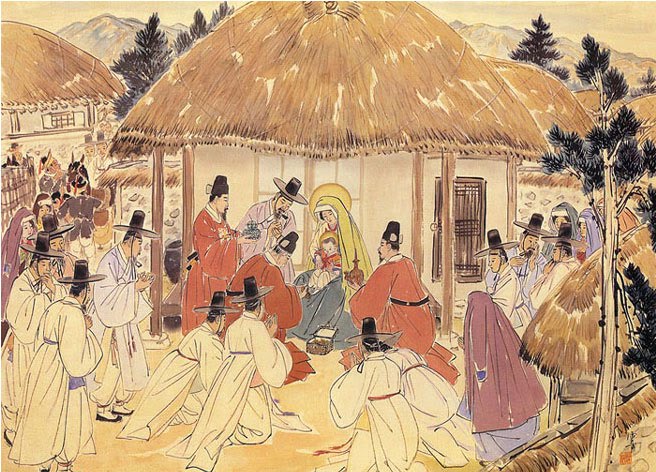 KOREA – The Coming of the Magi by Woonbo Kim Ki-chang 1950’s
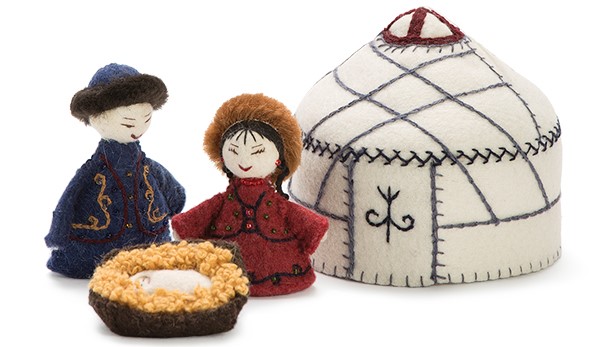
Some art is 3d, such as this creation by an artist/creator in Kyrgyzstan (northwest of China). I love the Yurt!
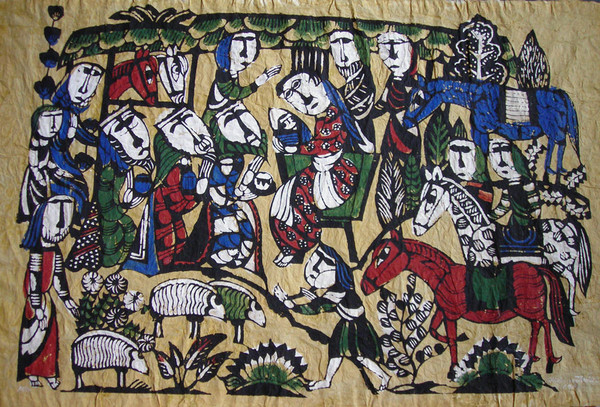
JAPAN – Nativity by Sadao Watanabe (1913-1996) Stencil print
Watanabe used to have disdain for Christianity until he was supernaturally healed from tuberculosis. He dedicated the rest of his life to “expressing Christianity within a Japanese context.” He wanted to emphasize the universality of the Christian message. “I owe my life to Christ and the gospel,’ Watanabe once explained. “My way of expressing my gratitude is to witness to my faith through the medium of biblical scenes.” Read more about him at Sacred Heart Pilgrim.
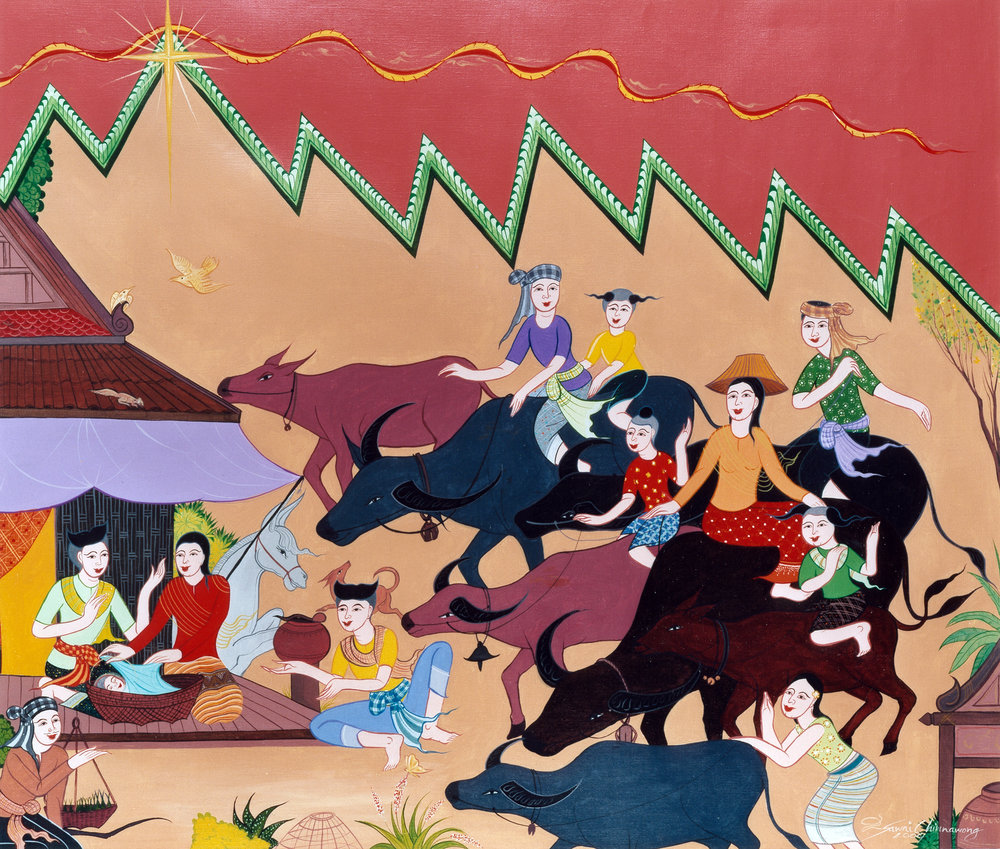
THAILAND – Nativity. 2004 by Sawai Chinnawong, Acrylic on canvas, 32 x 37 in
Here is another interesting and inspiring story about an artisst and how he wanted to reach his culture! He writes, “My work represents influences from many styles…I believe Jesus Christ is present in every culture, and I have chosen to celebrate his presence in our lives through Thai traditional cultural forms. My belief is that Jesus did not choose just one people to hear his Word, but chose to make his home in every human heart. And just as his Word may be spoken in every language, so the visual message can be shared in the beauty of the many styles of artistry around the world.”
A collection of his drawings have been compiled into a book about the life of Christ written in both English and his native language.
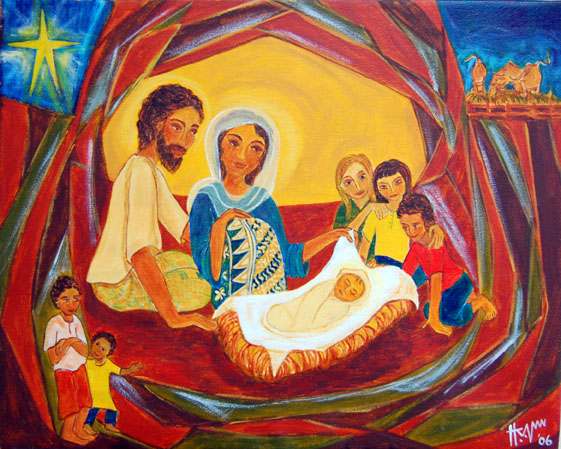 MALAYSIA – God Is With Us, 2006. by Hanna Varghese, Acrylic on canvas,
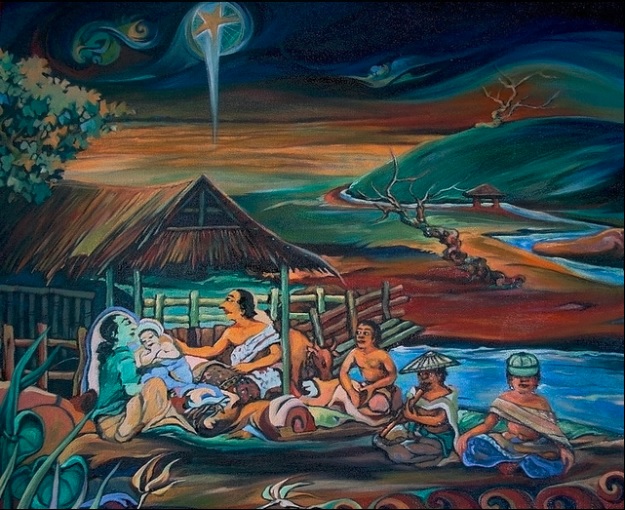
INDONESIA – Nativity, 2011. Gde Sukana Kariana (Indonesian, 1974-), Oil on canvas
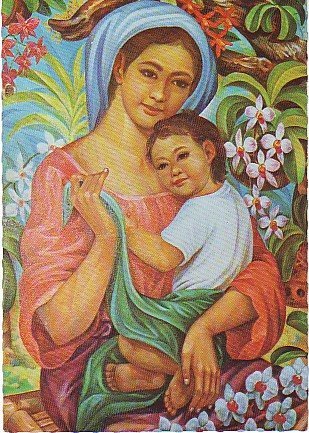
PHILIPPINES – Madonna and Child by Balagtas

PHILIPPINES – “Yang ya Utaw si Manggob” (When Manggob Was Born) by Federico Dominguez (Filipino, 1953-)
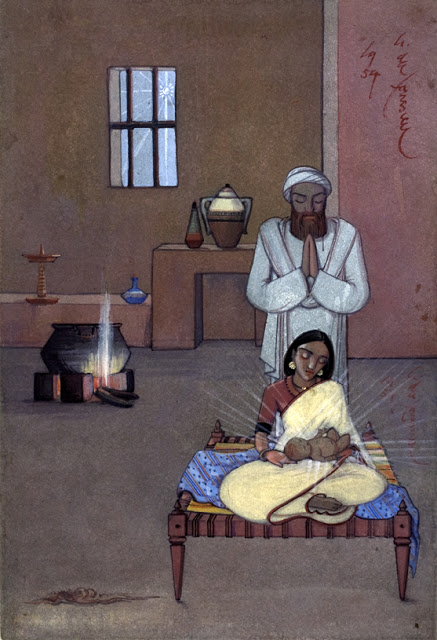
INDIA – Nativity. 1954 by Angelo da Fonseca (1902-1967)
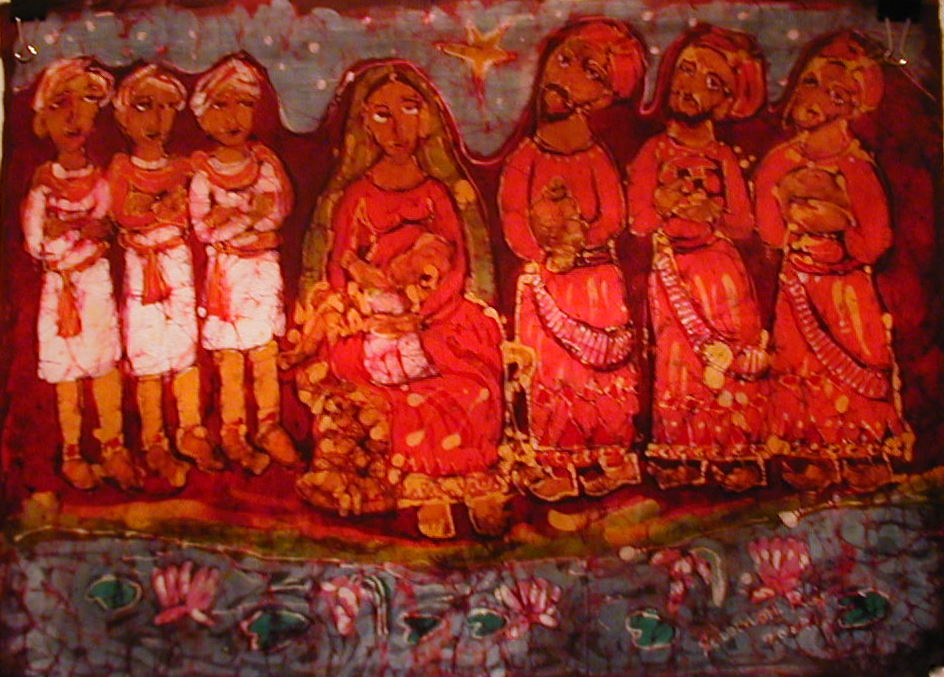
INDIA – Nativity, 1980s. P. Solomon Raj, Batik.
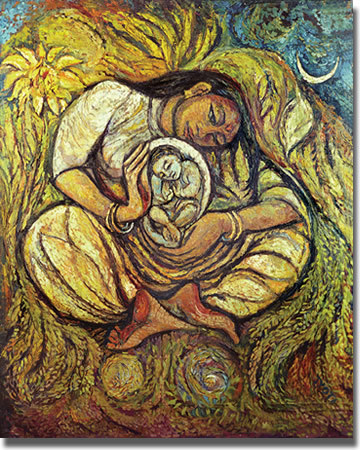
INDIA – The Dalit Madonna. 2007. by Jyoti Sahi
Australian Nativity Art
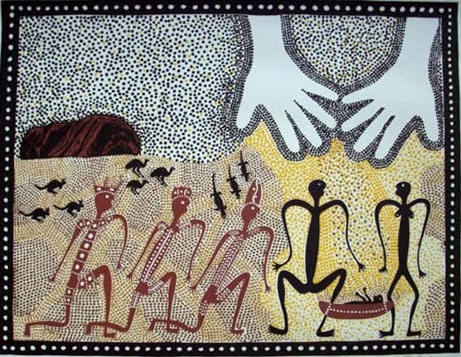
AUSTRALIA – Dreamtime Birth -Australian nativity. 1990s? Greg Weatherby
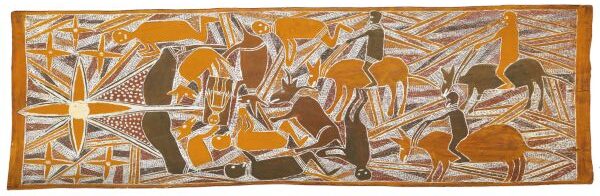
AUSTRALIA – Nativity. 1960, Mawalan Marika. Natural earth pigments on eucalyptus bark. AUSTRALIA – Black Madonna: Omega, 2004, by Julie Dowling, synthetic polymer paint, red ochre, glitter and metallic paint on canvas, 2017 © Julie Dowling/Copyright Agency, 2018. Courtesy the artist and Art Gallery of Western Australia, Perth
European Nativity Art
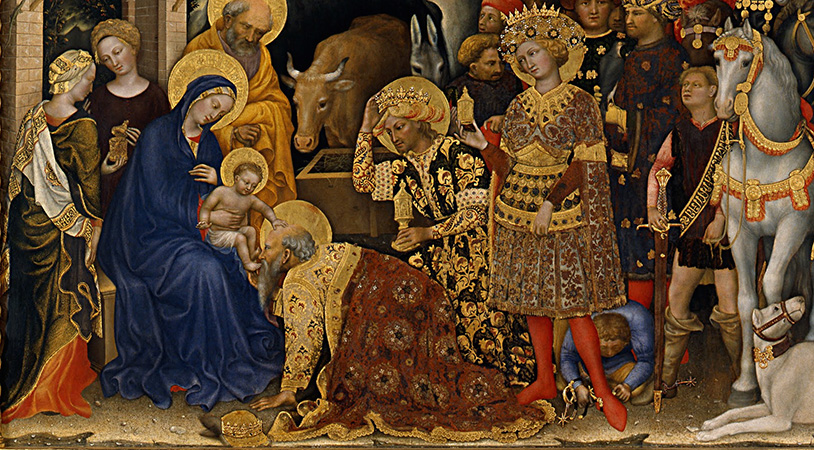
ITALY – Adoration of the Magi, 1423, Gentile da Fabriano, tempera on panel, 283 x 300 cm (Uffizi Gallery, Florence)
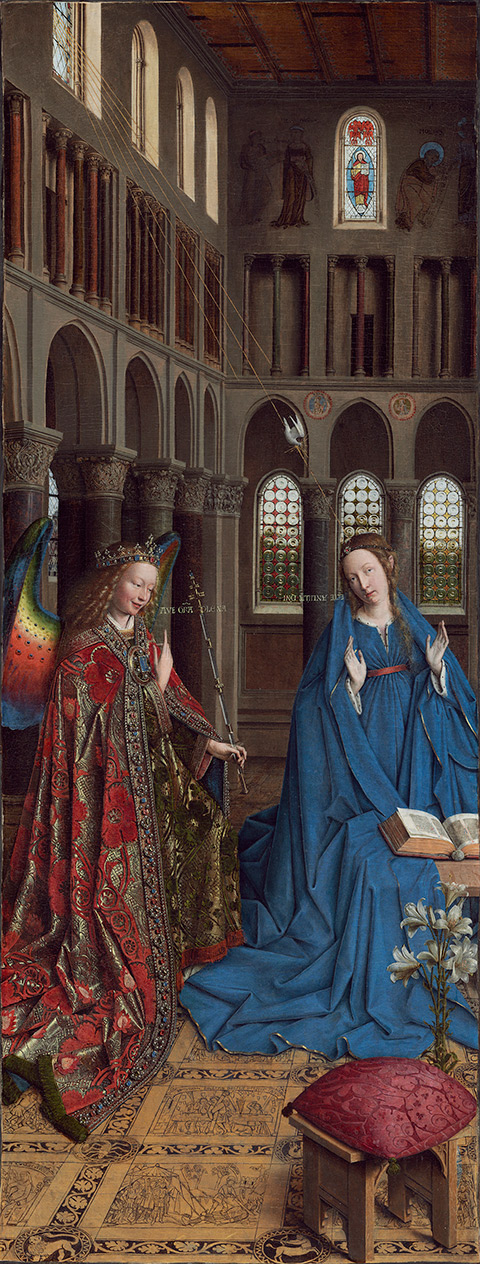
NETHERLANDS – The Annunciation (detail), about 1434/36, Jan van Eyck. The National Gallery of Art, Washington, D.C.,
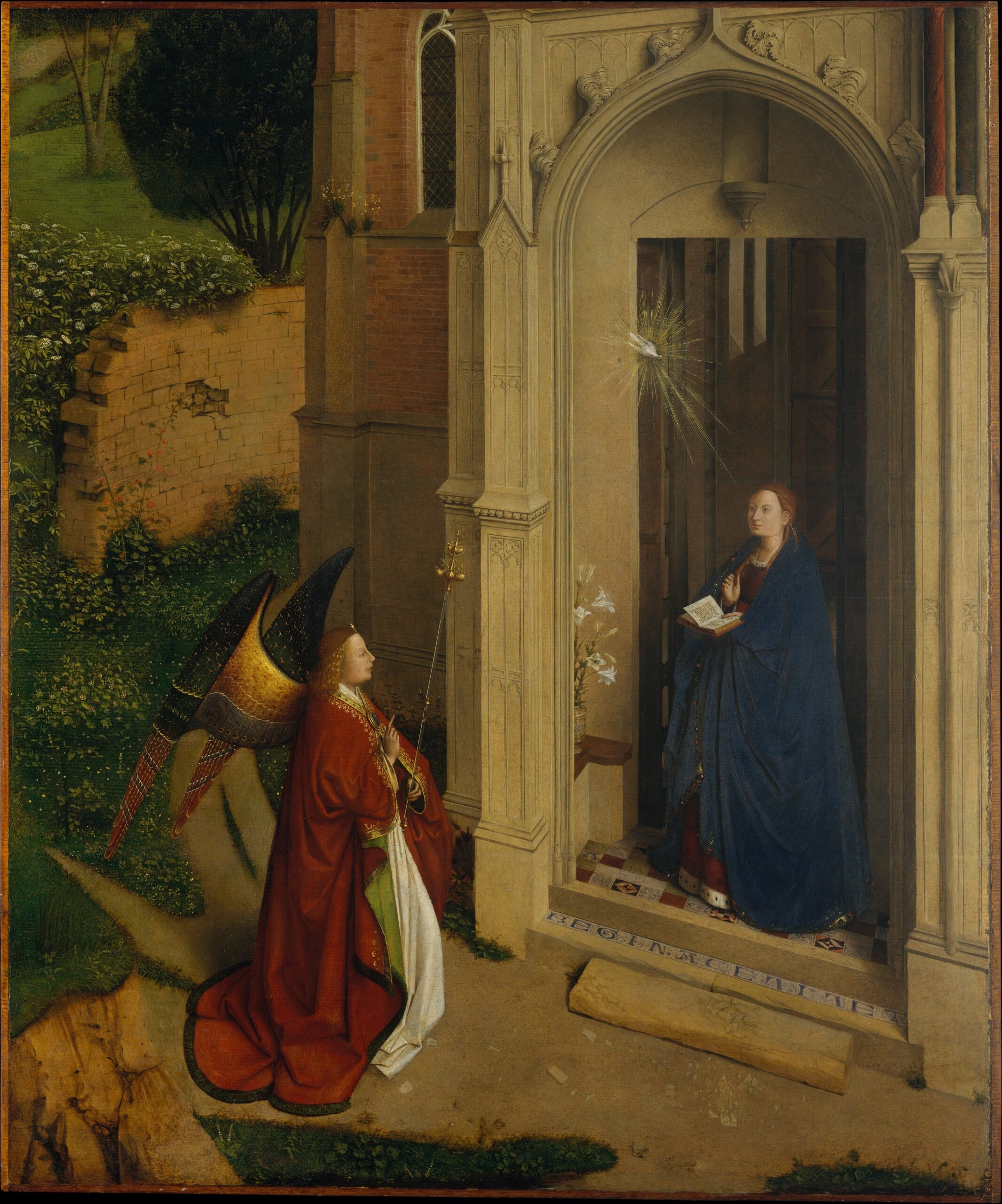
NETHERLANDS – The Annunciation, ca. 1450. Attributed to Petrus Christus
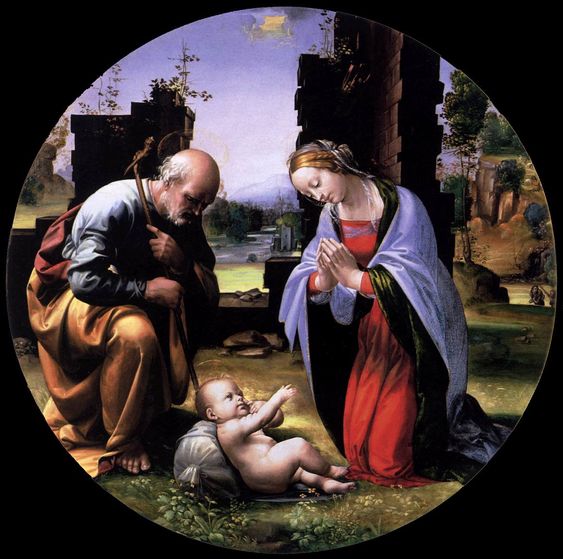
ITALY – The Adoration of the Christ Child, c 1490. Fra. Bartolomeo or Leonardo da Vinci (read about the mystery fingerprint here) 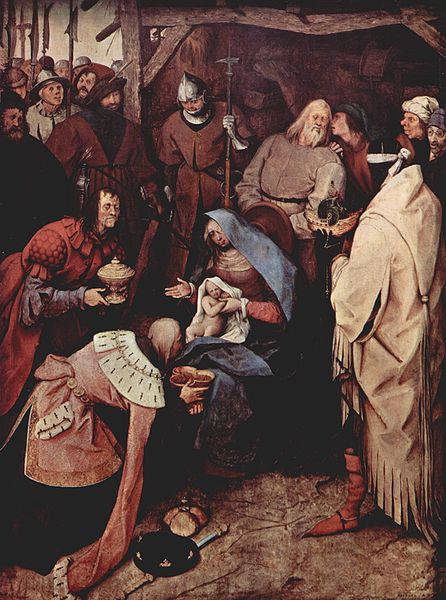
BELGIUM – Anbetung der Heiligen drei Könige. 1564, Pieter Bruegel the Elder
Soak up the beauty captured in each and every work of art and remember what was written in Revelation about Jesus…
“Worthy are you to take the scroll and to open its seals,
for you were slain, and by your blood you ransomed people for God
from every tribe and language and people and nation.” Rev 5:9

Each of these pictures is stunning! We really enjoyed how the individual artists captured their belief of Christ. Christ truly is the Savior of all people!
These are so beautiful. I am entranced with the ones from Australia. Truly breathtaking! Thank you for sharing with us.